What sets the company's civil concrete construction apart from every other firm in the Denver metro area.
Ironclad Compaction & PSI Certification Reports
The company eliminates the threat of structural failure. Stone & Concrete uses independent, certified testing labs directly on-site to verify subgrade density and concrete core strength (PSI), delivering documented reports for complete compliance.
100% In-House Fleet & Crew Deployment
The firm never outsources projects to third-party subcontractors. Every operator handling heavy machinery or finishing a joint is an internally trained, fully insured company employee, ensuring total layout control and zero broker markups.
Elite Adherence to Strict Timelines
Unfinished logistics floors freeze operational cash flow and rental yields. Internal project managers enforce structured milestones to eliminate construction delays and hit exact deadlines.
Asset Value Protection & Preventative Inspections
Protect the property's resale value. Free annual concrete inspections evaluate warehouse expansion joints, forklift paths, and loading zones to catch issues early, allowing clients to secure scheduled maintenance before liabilities grow.
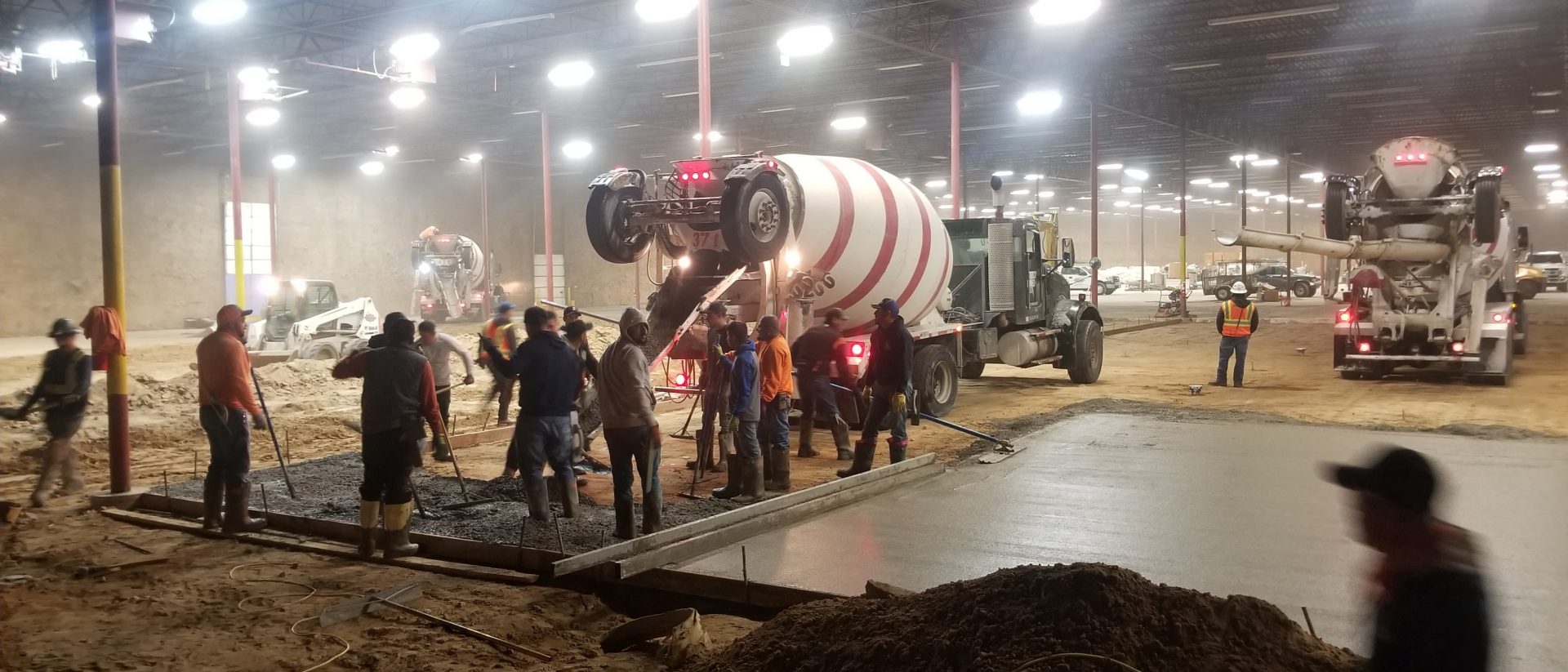
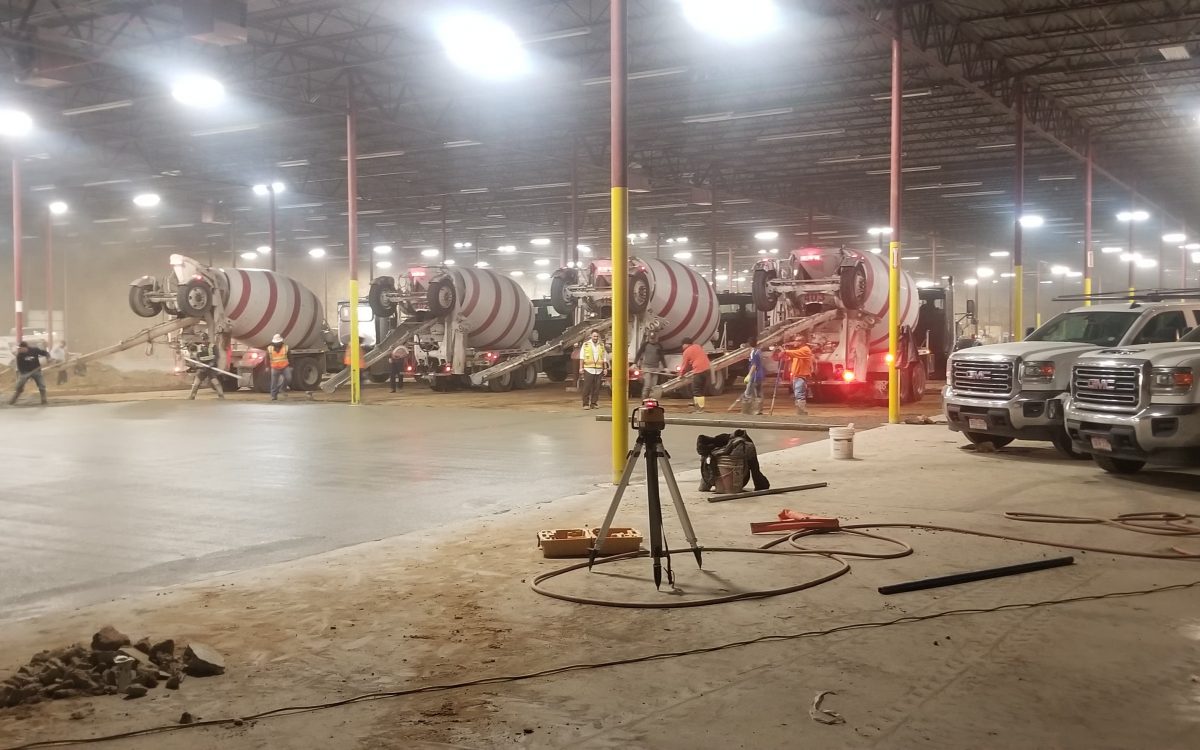
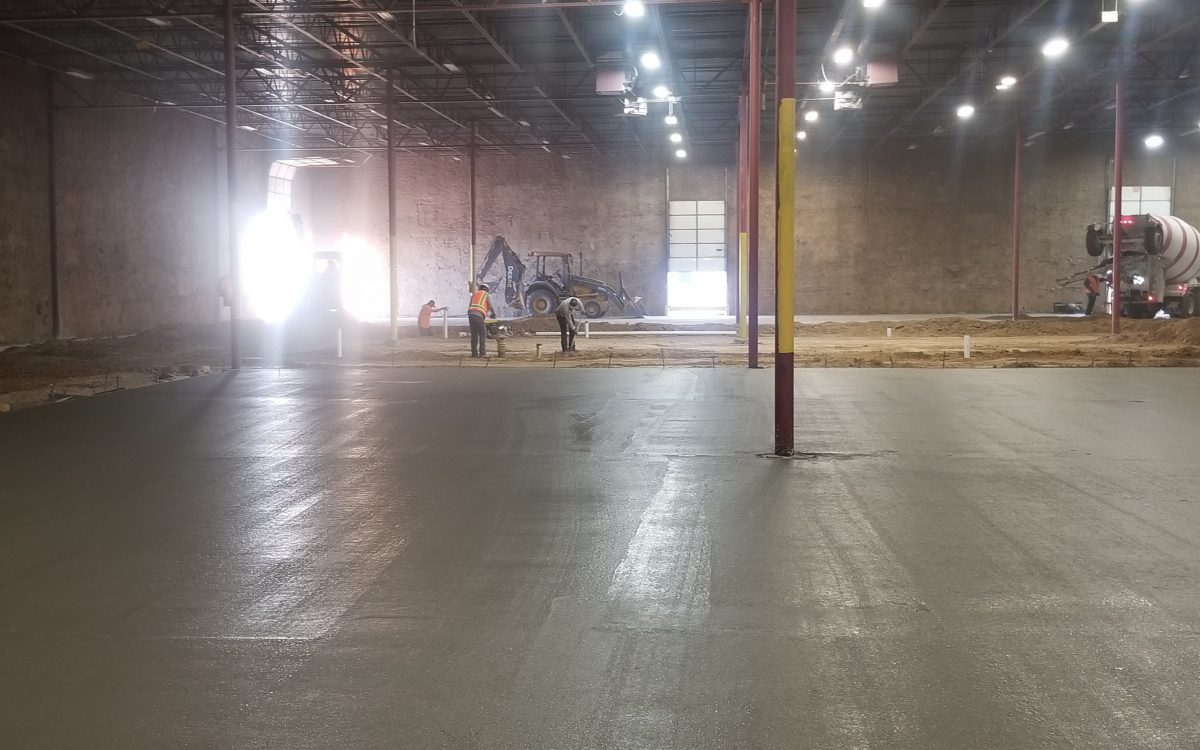
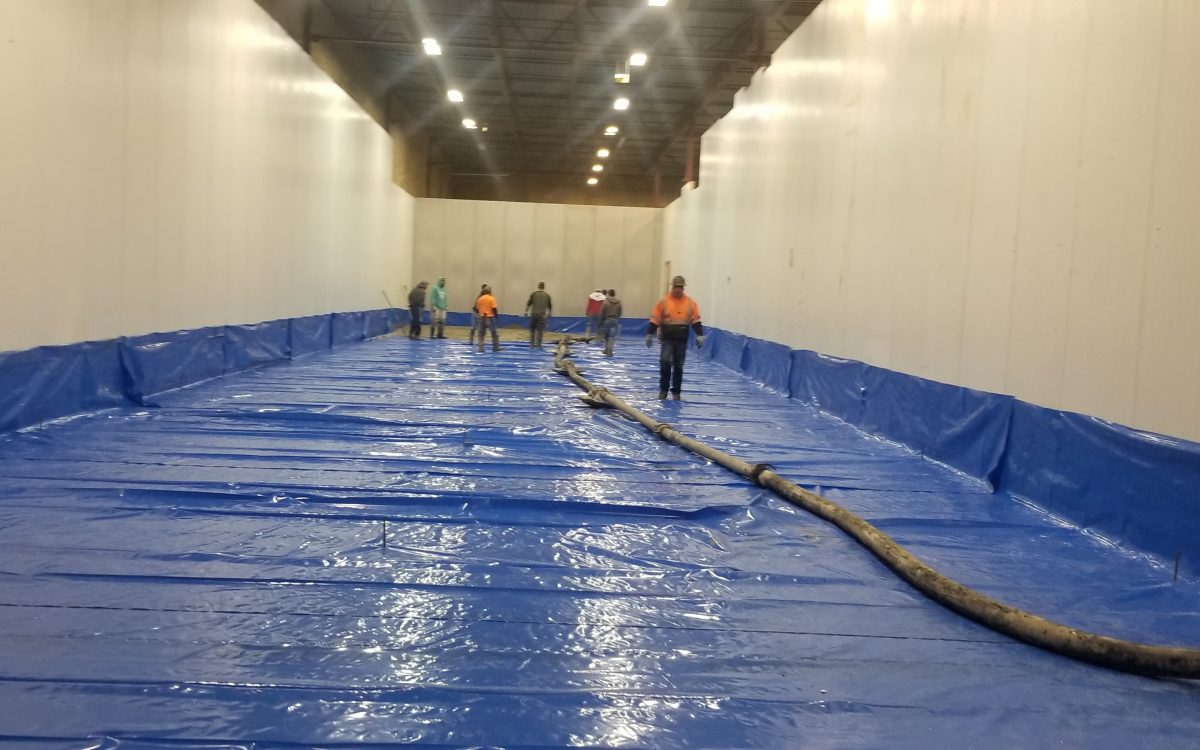
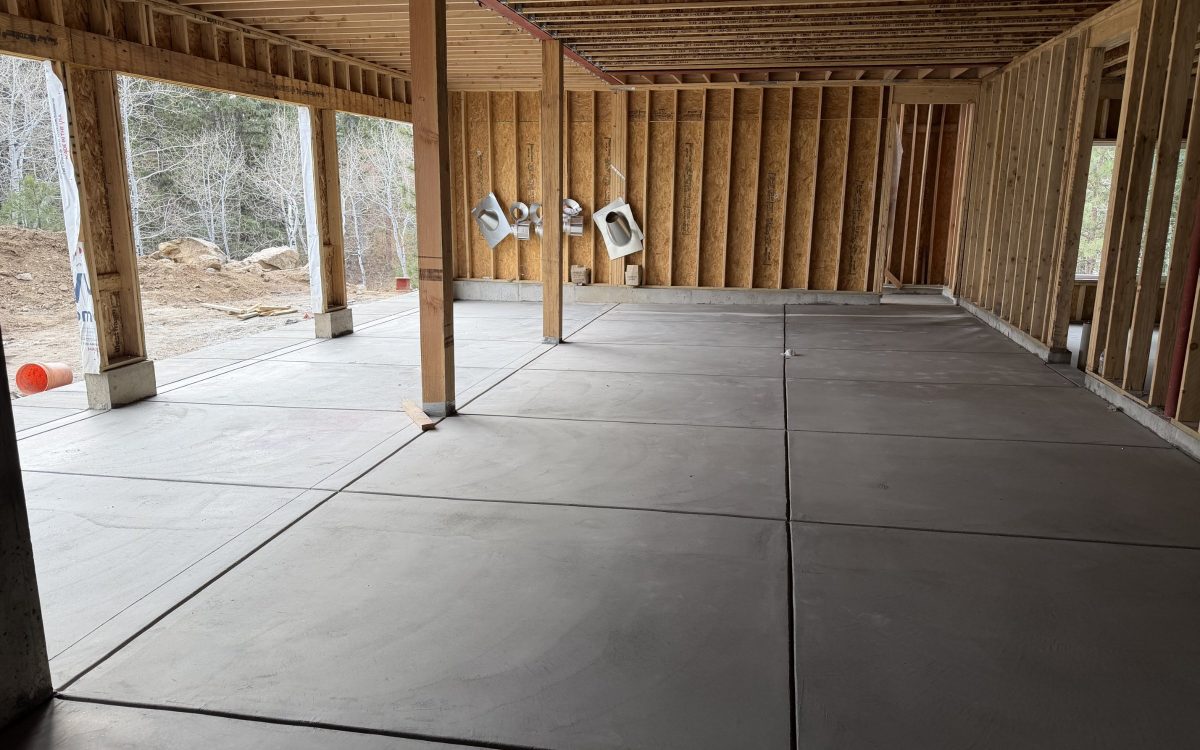
Recent slab & floor pours.
Service Areas.
03 / FAQ
Frequently Asked Questions.
Industrial manufacturing and logistics floors require heavy-duty reinforced configurations, typically utilizing a minimum of 4,000 to 5,000 PSI concrete mixes. The subgrade preparation must be flawless, involving mechanical compaction and a high-density aggregate base layer. Slabs are reinforced with engineered steel rebar grids or structural fibers to prevent localized punching shear and ensure optimal load distribution under multi-ton axle weights.
Specialized equipment, including laser-guided screeds and advanced mechanical trowels, is deployed to achieve precise Floor Flatness (FF) and Floor Levelness (FL) metrics. High-rack storage systems require exceptionally flat surfaces to prevent forklift mast tilting and operational safety hazards. Every industrial pour is monitored and finished to satisfy exact architectural blueprints and structural load requirements.
Non-stop forklift traffic creates intense point loads right at the edges of concrete joints. If joints lack proper steel dowel alignments or elastomeric fillers, the concrete edges will spall, chip, and break down under wheel impact. Technicians cut precision control joints and inject heavy-duty polyurea joint fillers to transfer loads smoothly across slabs, protecting expensive machinery tires and extending the floor’s operational lifecycle.
While concrete achieves a massive percentage of its design strength within 3 to 7 days, allowing light foot traffic, heavy industrial vehicles and warehousing racks should remain off the slab for a minimum of 14 to 28 days. The commercial division coordinates directly with independent material testing laboratories to pull core samples and verify when precise PSI limits are achieved before clearing the floor for operational deployment.
In many cases, localized surface damage can be remediated through structural concrete stitching, deep joint cleanouts, and high-strength polymer overlays or epoxy injections. However, if a slab is buckling due to an underlying subgrade failure or massive soil shifting, a targeted breakout and replacement is necessary. Technicians perform precise site diagnostics to determine the most cost-effective and structurally sound approach.
Secure a Heavy-Duty Industrial Bid Today.
Don't let cracked, uneven, or standard-grade concrete compromise an industrial property's value or cause costly operational delays. Call for an immediate project scoping consultation or submit formal bid requests online.